
Cooperative Care: Kind Handling Basics
Cooperative care is a simple but powerful shift in how we handle our dogs. Instead of doing things to a dog — holding them still for a nail trim, gripping the muzzle to check teeth, hauling them onto the vet's table — we do those things with them. The dog is given a say. They can choose to take part, and they can choose to stop. That choice is not a loss of control; it is the foundation of calmer, safer handling for the rest of your dog's life.
This matters because so much of ordinary dog care involves touch the dog never asked for. Grooming, ear checks, harnesses, vaccinations and clipped nails are all things humans decide are necessary. If a dog has no way to influence what happens, the only tools left to them are stillness through fear, or struggle. Cooperative care offers a third path: predictable handling, paired with good things, at a pace the dog can manage. A dog who can opt in rarely needs to be forced — and a dog who is never forced rarely learns to dread your hands.
The aim is partnership, not perfection. For the reasoning that shapes every method here, read our humane dog-training principles, and to understand the boundaries of this resource, see what this site covers.
Safety note
This article is educational only. It is not veterinary advice, a diagnosis, or an individualised behaviour plan for your dog.
Handling is one of the most common places hidden pain shows up. A dog who suddenly flinches, pulls away, freezes, growls or snaps when touched may be telling you something hurts — not "being difficult". If your dog reacts with fear or aggression to handling, stop and seek qualified help, because pain is a frequent hidden cause. Sudden behaviour change, signs of illness or injury, severe fear, panic, aggression, growling, snapping or distress may need a veterinarian, a certified positive-reinforcement trainer, a certified behaviour consultant, or a veterinary behaviour professional. Learn to spot the warning signs in our guides to dog behaviour red flags, signs of pain in dogs, and sudden behaviour change.
What cooperative care really means
At its heart, cooperative care is about consent and predictability. The dog learns that handling follows a calm, familiar pattern, that good things come with it, and that they always have a way to take a break. Nothing is sprung on them. Over time, the dog stops bracing for the worst because experience tells them the worst never comes.
- The dog can opt in. We invite participation rather than impose it, and we treat a willing dog as the goal, not a still one.
- The dog can opt out. A pause is always available. If the dog moves away or tenses, that is information, and we respect it.
- Good associations are built deliberately. Touch is paired with food, praise and quiet reassurance so that handling predicts something pleasant.
- Everything is predictable. Same words, same gentle order, same calm voice. Predictability is what lets a dog relax.
The core ideas
You do not need special equipment or a behaviour qualification to begin. You need a handful of treats, a quiet moment, and a willingness to go slower than feels necessary. These few principles do most of the work.
Go slow, and let the dog set the pace
The single most common mistake is moving too fast. Begin with the easiest version of any handling — a brief touch on the shoulder rather than gripping a paw — and only progress when the dog is comfortably relaxed. If in doubt, do less. Short, frequent, happy sessions beat long ones that end with a stressed dog.
Pair handling with food and praise
As you touch, offer something good. The simplest pattern is: gentle touch first, then treat. The dog learns that your hand reaching out reliably predicts a reward, so the reach itself becomes welcome. Use food your dog genuinely loves for anything they find harder.
Watch body language
Your dog is talking the whole time. Loose body, soft eyes, easy breathing and leaning in mean "carry on". Lip-licking, yawning, turning the head away, a tucked tail, stiffness, a hard stare or trying to leave all mean "slow down or stop". Reward the relaxed dog; never push through the worried one.
Use start-button and consent behaviours
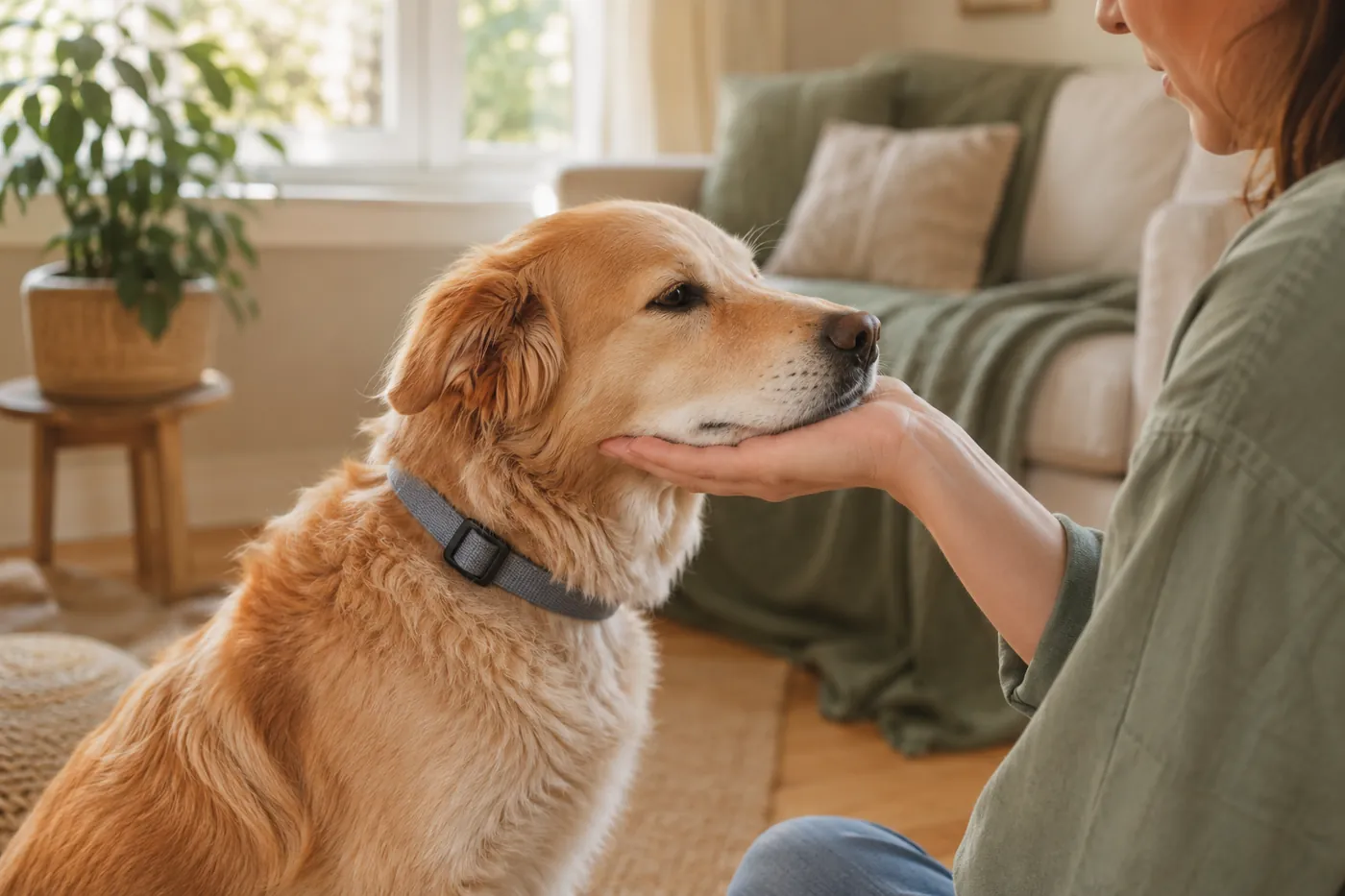
A "start-button" behaviour is a small action the dog can offer to say "I'm ready". Common examples include resting the chin in your hand or on a folded towel, standing still on a mat, or settling on their side. While the dog holds the position, handling continues and rewards flow. The moment they lift the chin or step away, you stop. The dog quickly discovers that they control the session — which, paradoxically, makes them far more willing to stay.
Always allow a pause
Build breaks in on purpose. Stopping before the dog feels they need to escape teaches them that a calm "no thanks" works, so they never have to escalate to a growl or snap to be heard.
A simple way to begin at home
Pick one easy area and one quiet, unhurried moment. The goal of these early sessions is not to "get something done" — it is to teach your dog that handling is pleasant and entirely safe.
- Sit on the floor or sofa with your dog and a few small treats within reach.
- Touch a low-stakes spot, such as the shoulder or chest, for a second, then give a treat.
- Repeat a handful of times, keeping your voice soft and your movements slow.
- Pause and watch. If your dog stays loose and leans in, do one more. If they look away or shift back, end on that good note.
- Finish while your dog still wants more, ideally after only a minute or two.
Over the following days you can gently widen the map — a paw held briefly, an ear lifted, the collar touched — always touch first, treat second, and always stopping before your dog wants you to.
A staged starter plan
- Days 1–3: easy touches only (shoulder, chest, along the back), each paired with a treat. Keep sessions under two minutes.
- Days 4–7: introduce a chin rest or "stand on the mat" so your dog has a way to opt in, and reward generously for holding it.
- Week 2 onward: add slightly trickier areas — paws, ears, around the mouth, the collar and harness — one at a time, dropping back a step whenever your dog looks unsure.
How this underpins everything else
Cooperative care is the entry point to almost every hands-on task a dog faces. Once your dog trusts the pattern of "calm handling predicts good things", that trust transfers across the board. The specifics live in their own guides, but they all grow from these basics: getting your dog used to nail trims, helping your dog enjoy brushing and grooming, getting your dog used to tooth brushing, and making vet visits less stressful. Start with general acceptance of gentle handling, and the more specialised tasks become far easier.
When this guide is a good fit
This guide may help if:
- your dog is generally healthy but a bit wary of grooming, nail trims, ear checks or the vet
- you want to build good handling habits early, especially with a puppy or new rescue
- you would like a kinder, calmer routine than wrestling or distracting your dog through care
- your dog tolerates handling but you sense they would rather not, and you want them to genuinely relax
This guide is not enough if:
- your dog growls, snaps, panics or freezes when touched — that needs qualified, in-person help
- handling problems appeared suddenly or your dog seems sore, which points to a possible health issue and a vet check
- your dog has a history of biting during handling, where safety must come first
- a procedure genuinely cannot wait, in which case speak to your vet about the safest approach for that moment
Troubleshooting
"My dog just walks away whenever I start a session."
That is cooperative care working exactly as intended — your dog is opting out, which is their right. Make the task easier, increase the value of the treats, and shorten the session. Often the dog is simply telling you the step was too big. Walking away is far better than freezing in fear, so honour it and try a gentler version.
"How long until I can actually trim a nail or brush the teeth?"
There is no fixed timetable, and chasing one usually backfires. Some dogs are happy within days; others need weeks. Let your dog's body language set the schedule. The slower, more positive route is almost always the faster route in the end, because you are not constantly repairing fear.
"My dog loves food so much they get over-excited and can't settle."
Try calmer rewards — a lick mat, scattered kibble, or quiet praise — and handle in a low-stimulation room. Some dogs do better being fed steadily between touches rather than after each one. Pairing handling with a settled state, such as our guide to teaching a dog to settle calmly, can help enormously.
"He's fine when my partner holds him still. Isn't that easier?"
Holding a dog still can look like success while quietly teaching them that hands mean being trapped. A dog who tolerates restraint today may suddenly refuse — or snap — tomorrow. Letting the dog hold the position themselves builds genuine willingness that lasts, rather than compliance that can crack.
What not to do
Do not:
- force, pin, scruff or physically restrain your dog to "get it over with"
- use shock, prong, choke or bark collars, leash corrections, or any "alpha", dominance or "pack leader" approach
- punish, scold, shout at or startle a dog for wriggling, pulling away or saying no
- flood your dog by exposing them to the full, scary version of a procedure all at once
- rush the steps or ignore body language that says your dog needs a break
- push on through growling, snapping or panic — stop and seek qualified help instead
How this connects to other pages
Think of this page as the hub. From here, move on to teaching your dog to accept gentle handling as the next core skill, then branch into nail trims, brushing and grooming, tooth brushing and less stressful vet visits. Folding short handling moments into your simple daily dog-training routine keeps the skill fresh, and a dog who can already settle calmly will find every one of these tasks easier.
Educational disclaimer
The information on this page is provided for general educational purposes about kind, reward-based dog care. It is not veterinary advice, a medical or behavioural diagnosis, or a substitute for individualised guidance from a suitably qualified professional who can assess your dog in person.
Every dog is an individual. If your dog shows fear, pain, aggression, or any sudden or worrying change in behaviour, please pause this approach and consult a veterinarian, a certified positive-reinforcement trainer, a certified behaviour consultant, or a veterinary behaviour professional. Pain is a common and easily missed cause of handling problems, so a health check is often the kindest first step.
Sources and further reading
These sources support the humane-training and welfare boundaries used on this page. This page is educational only and is not a substitute for veterinary or qualified behaviour support.