
How to House-Train a Puppy Without Punishment
House-training — also called potty training or toilet training — is one of the first things most new puppy owners want to get right. The good news is that it is mostly about routine, supervision, and rewards, not willpower or discipline.
Puppies are not having accidents to be naughty, stubborn, or “dominant.” Very young puppies simply cannot hold their bladder and bowels for long, and they have not yet learned where you would like them to go. House-training is the process of helping them build that habit, gently, as their body matures.
This guide is for ordinary, healthy puppies and recently adopted dogs learning where to toilet. For the methods behind it, read humane dog-training principles, and for what this site does and does not cover, read what this dog-training site covers.
The quick answer
House-training works fastest when you prevent accidents and reward the right spot — not when you punish mistakes. Take your puppy out often, reward outdoor toileting warmly, and clean up any accidents calmly.
- Take your puppy out often: on waking, after eating, after play, and regularly in between.
- Reward the moment they finish outside, right there, every time.
- Supervise closely indoors, and use safe confinement when you cannot watch.
- Clean accidents with an enzyme cleaner and never punish them.
Safety note
This article is educational only. It is not veterinary advice, a diagnosis, or an individualized training plan.
Toileting problems sometimes have a medical cause. Contact a veterinarian if a puppy or dog strains to urinate, goes very frequently or in tiny amounts, has blood in the urine or stool, has diarrhea, seems to drink much more than usual, suddenly loses house-training they previously had, or seems painful, unwell, or distressed. House-training advice should never delay a needed veterinary check. If a sudden change is involved, read sudden dog behavior change, and if the dog may be uncomfortable, read signs of pain in dogs.
When this guide is a good fit
This guide may help if:
- you have a healthy puppy still learning where to toilet
- you have adopted a dog who needs to learn your home and routine
- accidents happen because the puppy is young, excited, or was not taken out in time
- you want a calm, reward-based plan you can keep up day to day.
This guide is not enough if:
- a previously house-trained dog suddenly starts having accidents
- there are signs of straining, pain, blood, diarrhea, or increased drinking
- toileting is linked to fear, panic, or being left alone (this can be a sign of distress, not a house-training gap)
- an adult dog is marking, guarding, or showing other behavior you are unsure about.
In those situations, speak to a veterinarian or a qualified positive-reinforcement behavior professional. Toileting when left alone, in particular, can be related to distress that needs proper help rather than more training.
How long house-training takes
There is no fixed timetable. As a rough guide, many young puppies can hold their bladder for only about one hour for each month of age, plus they usually need to go after sleeping, eating, drinking, and playing. Reliable house-training often takes weeks to a few months, and occasional accidents during that time are normal, not a failure.
Patience matters more than speed. Punishing accidents tends to slow things down, because a puppy who is told off for toileting may simply learn to hide and go somewhere private instead.
The Four P’s of house-training
A simple way to remember the whole plan is four words:
- Predict — take the puppy out on a routine, before they need to go.
- Prevent — supervise or safely confine so accidents rarely get a chance to happen.
- Praise — reward calmly the moment they finish in the right place.
- Patience — clean up accidents calmly and never punish.
Predict: build a toilet routine
Most successful house-training is built on predictable timing. Take the puppy to their toilet spot:
- first thing in the morning
- after every nap
- shortly after meals and drinks
- after and during play sessions
- before settling for the night
- and regularly in between — for a young puppy, that can be roughly every hour while awake.
Going out before the puppy is desperate is the whole point. You are setting up easy wins, not waiting to see whether they can hold it.
Prevent: supervise and use safe confinement
When you cannot watch closely, calm management prevents accidents from becoming a habit.
- Keep the puppy in the same room as you, or use a playpen or a baby gate.
- Watch for the usual signs they need to go: sniffing the floor, circling, suddenly stopping play, or heading to a spot where they have gone before.
- When you see those signs, calmly and quickly take them to the toilet spot.
A crate, introduced kindly, can help some puppies because they often prefer not to soil their sleeping area — but a crate must never be used to make a puppy “hold it” longer than they physically can, and it should always be a comfortable place rather than a punishment. See positive crate training for how to introduce one humanely.
Praise: reward in the right place
Reward-based training works here just like everywhere else on this site.
- Take the puppy to the same toilet spot each time, on a lead if outdoors, so it stays calm and boring rather than a play trip.
- Wait quietly. Give them a minute or two without distractions.
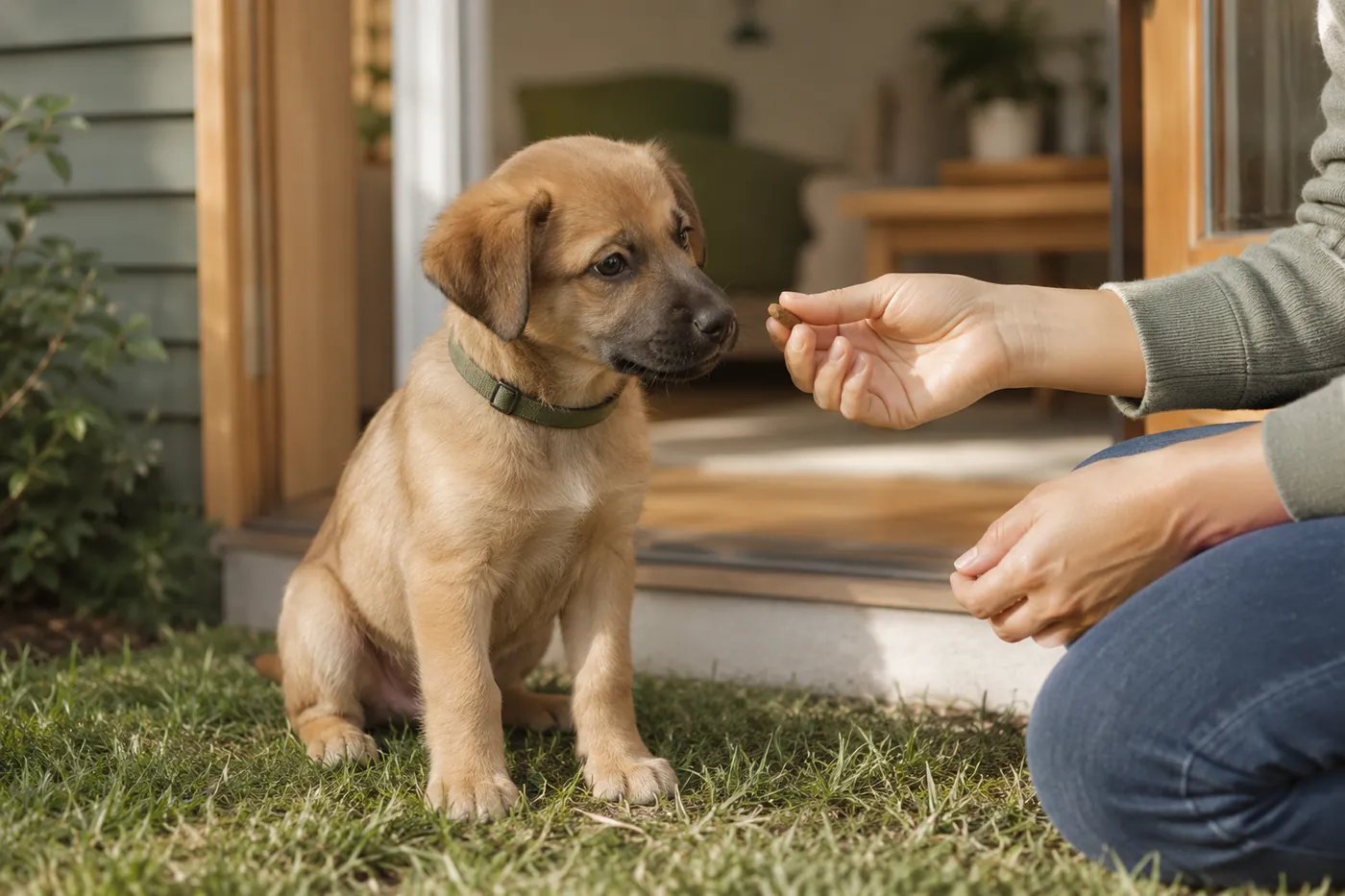
- The moment they finish, calmly praise and give a small food reward right there, outside.
- Then you can have a short play or a walk, so going out does not always end the fun the instant they go.
Rewarding in the spot, straight after they finish, helps the puppy connect “toileting here” with “good things happen.” Rewarding only once you are back inside teaches the wrong link.
Patience: handle accidents calmly
Accidents will happen. How you respond decides whether house-training speeds up or stalls.
If you catch the puppy mid-accident: interrupt very gently — a calm word or simply moving — then take them straight to the toilet spot and reward them if they finish there. No shouting, no startling.
If you find an accident after the fact: simply clean it up. The puppy cannot connect being told off now with something they did earlier, so punishment only creates fear and confusion.
Clean accidents thoroughly with an enzymatic pet cleaner rather than ordinary household products. Some cleaners leave a scent the dog can still smell, which can draw them back to the same spot.
A simple first-two-weeks plan
Days 1–3: set the rhythm
Decide on one toilet spot and a rough schedule. Take the puppy there on the routine above, reward every success, and keep them close or gently confined the rest of the time.
Days 4–7: learn their signals
Start to notice your own puppy’s “I need to go” signs and act on them quickly. Keep rewarding outdoor success generously.
Week 2: stretch the gaps slowly
As successes outnumber accidents, you can begin to lengthen the time between trips a little. If accidents increase, you have stretched too far — go back to more frequent trips for a few days.
Troubleshooting
“My puppy goes right after we come back inside.”
This usually means the trip was too short or too exciting. Stay out a little longer, keep the spot calm and lead-based, and reward immediately when they go so the outdoor trip is clearly the goal.
“We live in a flat and cannot get outside quickly.”
Some owners start with an indoor toilet area (such as puppy pads or a litter tray) near the door and gradually move it closer to, and then outside, the exit. This can work, though it sometimes adds a step because the puppy first learns to go indoors. Choose the approach that is realistic for your home.
“My puppy was doing well and has started having accidents again.”
Brief setbacks are common after changes in routine, home, or schedule. Go back to more frequent trips and closer supervision for a while. But if a previously reliable dog suddenly regresses, or there are any signs of straining, blood, or illness, contact a veterinarian first — this can be a medical sign, not a training gap.
“My puppy will not go when it is cold or raining.”
Keep trips short and rewarding, go to a sheltered spot if you can, and reward warmly the moment they finish. Avoid turning reluctance into a battle.
“Overnight accidents keep happening.”
Very young puppies may not last all night at first. A last trip out right before bed, a comfortable sleeping area near you, and an early-morning trip usually help. Overnight control improves as the puppy grows. If your puppy seems distressed at night rather than simply needing to toilet, read helping a puppy settle and sleep through the night.
What not to do
Do not:
- rub the puppy’s nose in an accident
- shout, scold, or punish after the fact
- use the crate or confinement as a punishment
- withhold water to reduce accidents (always provide fresh water unless a vet advises otherwise)
- use dominance or “alpha” explanations
- expect a young puppy to hold it for many hours.
Punishment-based methods tend to make a puppy nervous about toileting near you, which makes house-training harder and can damage trust.
How this connects to other pages
House-training fits alongside the rest of a calm puppy routine. A simple daily training routine helps build predictable timing, positive crate training can support clean sleeping habits, and teaching a puppy to settle calmly reduces the over-excitement that often triggers accidents. For the overall approach, see humane dog-training principles, and if you are ever unsure whether a problem needs professional help, check the dog behavior red flags.
Common questions
How long does it take to house-train a puppy?
Many puppies become largely reliable within a few weeks to a few months, but it varies with age, routine and consistency. Younger puppies need more frequent trips outside because they cannot yet hold on for long.
Why shouldn’t you punish a puppy for accidents?
Punishing accidents — including the old “rub their nose in it” idea — teaches a puppy to fear toileting near you, so they may hide to go or become anxious, which makes house-training slower. Rewarding the right spot works far better.
How often should I take my puppy out to toilet?
A common starting point is on waking, shortly after meals, after play or excitement, and every hour or two in between while they are young — plus the moment they start sniffing or circling. More trips out means fewer accidents to undo.
My house-trained puppy suddenly started having accidents — why?
A sudden return of accidents in a previously reliable dog can signal a medical issue such as a urine infection, or a change in routine or stress. It is worth a vet check to rule out a health cause before treating it as a training slip — see our dog behaviour red flags.
Educational disclaimer
This page provides general educational information about ordinary house-training for healthy puppies and dogs. It is not veterinary advice, a diagnosis, or an individualized behavior plan.
If the dog shows straining, blood in urine or stool, diarrhea, increased drinking, sudden loss of house-training, signs of pain or illness, severe fear, panic, or distress when left alone, contact an appropriate professional such as a veterinarian or qualified positive-reinforcement behavior professional.
Sources and further reading
These sources support the humane-training and welfare boundaries used on this page. This page is educational only and is not a substitute for veterinary or qualified behavior support.