
Help Your Dog Enjoy Brushing and Grooming
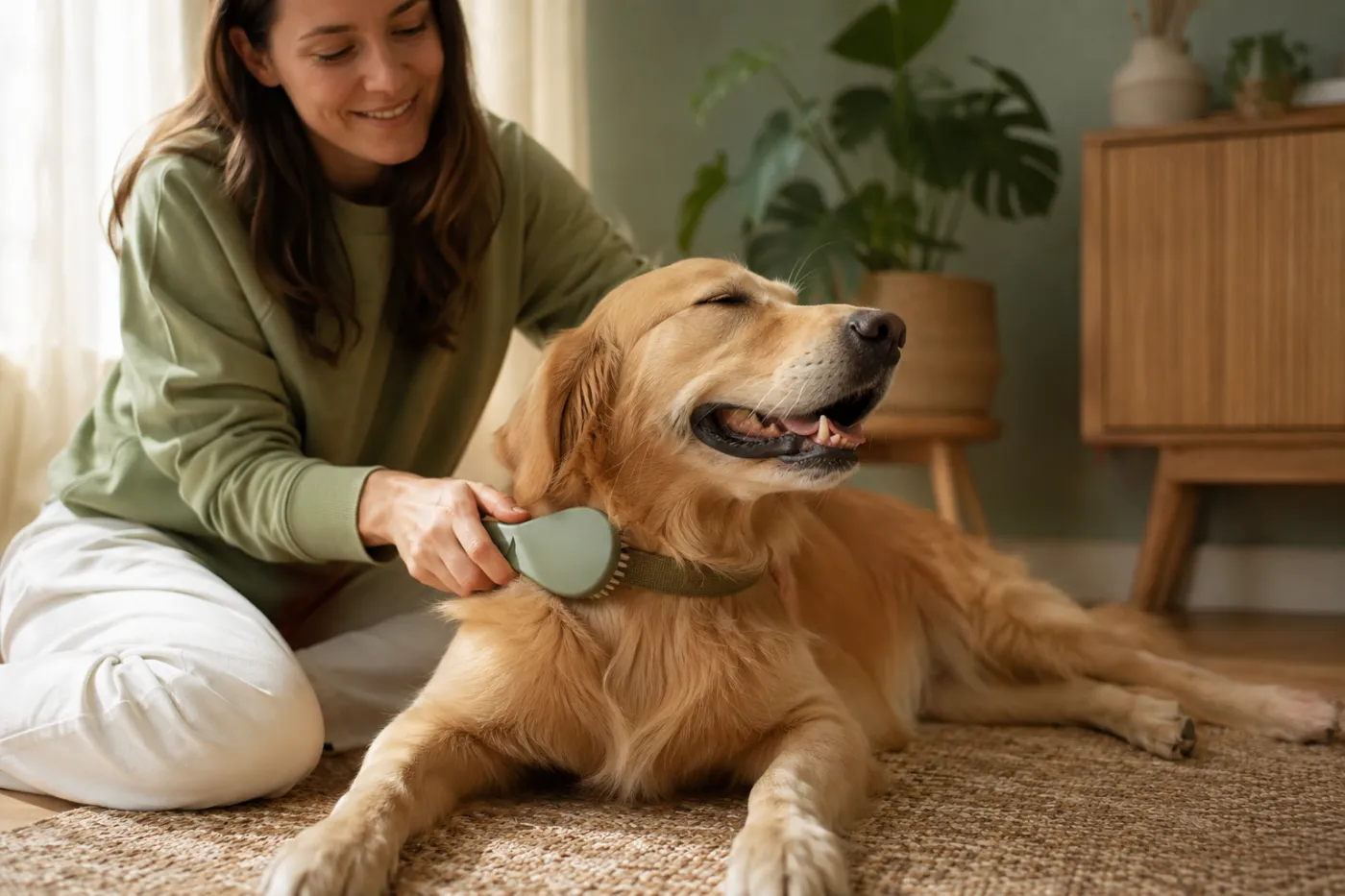
Brushing and home grooming are part of normal coat care, but for a lot of dogs they start out as something that happens to them rather than something they take part in. The good news is that grooming does not have to be a wrestling match. With short, friendly sessions and plenty of food and praise, most dogs can learn to relax for a brush, and some come to actively enjoy it. This is a cooperative-care skill: the dog gets a say, can opt in, and we move at their pace rather than ours.
Why does this matter for welfare? A dog who has been held still and brushed through their protests may tolerate it, but they have also learned that the brush means being trapped. Over time that tension can grow into ducking, hiding, or snapping when the brush comes out. A dog who has been paid and praised for staying still, on the other hand, learns that grooming predicts good things — and a calm, willing dog is far safer and easier to care for, especially as they age and need more handling.
This guide is for ordinary, healthy dogs whose owners want grooming to feel pleasant for everyone involved. For the thinking behind these reward-based methods, read humane dog-training principles, and to understand the boundaries of what we offer here, read what this site covers.
Safety note
This article is educational only. It is not veterinary advice, a diagnosis, or an individualised grooming or behaviour plan.
Some grooming difficulties are not training problems at all — they are signals that something physical needs attention. A tightly matted coat can pull painfully on the skin and should be dealt with by a professional groomer or vet rather than tackled at home with scissors. If you find lumps, scabs, redness, flaky or sore skin, signs of fleas or other parasites, or your dog flinches, yelps, or pulls away when a particular spot is touched, pause home grooming and speak to your vet — pain is a common hidden reason a dog dislikes being handled. See signs of pain in dogs' behaviour and dog behaviour red flags for what to watch for. A sudden change in behaviour around grooming, or severe fear, panic, growling, or snapping, deserves help from a vet, a certified positive-reinforcement trainer, a certified behaviour consultant, or a veterinary behaviour professional. If your dog reacts with fear or aggression to handling, stop and get qualified help rather than pushing on.
Start by making the brush mean good things
Before any brushing happens, the brush itself needs a friendly reputation. Many dogs have already decided the brush is bad news, so we rebuild that first impression slowly.
- Put the brush out and pay. Set the brush on the floor, let your dog sniff it, and scatter a few treats nearby. The brush appears, good things appear.
- Pick it up, then treat. Lift the brush, give a treat, set it down. Repeat until the sight of you holding it makes your dog look hopeful rather than wary.
- Touch without stroking. Rest the back of the brush against a shoulder for a second, then treat. You are teaching the dog that brush-contact predicts food, not restraint.
Let the dog choose to stay
Throughout this process, keep your dog free to walk away. A dog who is never trapped does not need to escalate to get space — they simply leave, and you have useful information about where their comfort ends. If your dog stays, leans in, or comes back for more, that is genuine consent and a sign you can carry on.
Short, positive brushing sessions
Once the brush is friendly, the brushing itself should stay brief and upbeat. A two-minute session that ends well beats a ten-minute battle every time.
- Begin where the dog likes it. Most dogs enjoy being touched along the chest, shoulders, or back. Start your strokes there, not on the feet, belly, or tail.
- Brush in the direction the coat lies and that the dog seems to enjoy, using gentle pressure. Watch their face: a soft body and a loose tail mean carry on; stiffening or turning away means ease off.
- Pair every few strokes with food or quiet praise. Brush a little, treat, brush a little, treat. The reward keeps the experience pleasant and gives the dog a reason to settle.
- Stop while it is still good. End before your dog gets restless, so the last thing they remember is the session finishing on a high note.
Building tolerance for the sensitive bits
Ears, paws, belly, tail, and the hindquarters are usually the spots dogs guard most, often because they are more sensitive or because mats gather there. These areas need extra patience.
- Approach one area at a time. Spend several sessions just touching near a sensitive spot and paying well before you ever bring the brush to it.
- Lower your criteria. Near the paws or belly, a single light stroke followed by a generous treat is plenty for one day. Build up over days, not minutes.
- Read the body language. Lip-licking, yawning, whale eye (whites showing), or freezing are requests for a break. Honour them — pushing through erodes the trust you have built.
If a particular area is consistently sore to touch, that is a reason to check in with your vet rather than something to train through. For more on teaching willing handling generally, see teach your dog to accept handling.
Making bath time and drying calmer
Baths add water, noise, and slippery footing to the mix, so they deserve their own gentle build-up. Keep coat-care choices and frequency general — how often a dog needs bathing varies, and your vet or groomer can advise for your individual dog.
- Make the tub or basin a treat zone first. Let your dog step in and out for food before any water is involved, and use a non-slip mat so they feel secure underfoot.
- Introduce water gradually and keep it comfortably warm. Wet one area, treat, then move on, rather than soaking the whole dog at once.
- Go easy with drying. A soft towel and slow movements suit most dogs. If you use a dryer, start it at a distance, on the lowest setting, paired with treats, and stop if your dog is uneasy.
A simple starter plan
Week 1: friendly brush, no real brushing
Spend the first week purely on the brush meaning good things — sniffing it, seeing it lifted, feeling the back of it rest against a shoulder, always followed by food. No grooming pressure at all.
Week 2: a few strokes in the easy zones
Add short, two-stroke passes over the chest, shoulders, and back, paired with treats, ending before your dog tires of it. Keep sessions under two or three minutes.
Week 3: gentle progress toward the tricky areas
Begin lightly touching, then briefly brushing, near the paws, ears, and tail, one area at a time, dropping your expectations and paying generously. If any week feels too much, drop back a step — there is no prize for rushing.
When this guide is a good fit
This guide may help if:
- your dog is generally healthy and simply finds brushing dull, fidgety, or mildly worrying
- you want to build a calm, willing routine rather than holding your dog still
- you are starting young, or starting over with an adult dog at a relaxed pace
This guide is not enough if:
- your dog has matted fur, skin problems, lumps, parasites, or pain when touched — these need a vet or professional groomer
- your dog shows severe fear, panic, growling, or snapping during grooming
- grooming has become a flashpoint and you need hands-on, individualised support from a qualified professional
Troubleshooting
"My dog runs and hides as soon as I pick up the brush."
That tells you the brush still predicts something unpleasant. Go right back to the first stage — brush appears, treats appear — and rebuild from there without any brushing for a while. Never chase or corner a dog who has left; let them choose to come back.
"He's fine on his back but turns and mouths at me near his paws."
Mouthing near a specific area is a clear "too much, too fast" message, and sometimes a sign of tenderness. Lower your criteria right down to a single touch near the paw for a treat, build very slowly, and have your vet check the feet if the reaction continues.
"She sits still but looks miserable the whole time."
Tolerating is not the same as enjoying. A stiff, still dog showing whale eye or lip-licking is coping, not relaxed. Shorten your sessions, raise the value of your treats, and end sooner, so she starts to associate grooming with good outcomes rather than endurance.
"How often should I be brushing or bathing?"
This varies a great deal by coat type, lifestyle, and individual dog, and it sits outside what we can advise here. Your vet or a professional groomer can recommend a sensible routine for your dog. Our focus is only on making whatever grooming you do feel pleasant.
What not to do
Do not:
- pin, scruff, straddle, or forcibly restrain your dog to get grooming done
- use shock, prong, choke, or bark collars, leash corrections, or any "alpha", dominance, or "pack leader" approach
- scold, shout, smack, or startle a dog who struggles, wriggles, or pulls away
- rush through sensitive areas or flood the dog by pushing past their first signs of worry
- cut out mats with scissors at home — the skin underneath is easy to nick; leave this to a groomer or vet
- treat a dog's "no" as defiance; backing off and trying again later is how trust is built
How this connects to other pages
Brushing sits within a broader set of gentle handling skills. The foundations are covered in cooperative care and kind handling basics, and you can extend the same patient approach to nail trims, tooth brushing, and less stressful vet visits. A dog who can already settle calmly on a mat will often find grooming far easier, so it is well worth building that skill alongside this one.
Educational disclaimer
The information on this page is provided for general education about reward-based, welfare-friendly grooming. It is not veterinary advice, a medical opinion, or a substitute for an individualised plan from a qualified professional. Nothing here is a guaranteed result, an instant fix, or a recommendation about any specific grooming product, tool, or coat-care regime — those choices are yours, ideally in consultation with your vet or groomer.
If your dog shows signs of pain, illness, injury, severe fear, panic, or aggression, or any sudden change in how they respond to being handled, please consult a veterinarian, a certified positive-reinforcement trainer, a certified behaviour consultant, or a veterinary behaviour professional. When in doubt, stop and ask for qualified help — it is always the kinder choice.
Sources and further reading
These sources support the humane-training and welfare boundaries used on this page. This page is educational only and is not a substitute for veterinary or qualified behaviour support.