
Sniffari walks: let your dog sniff
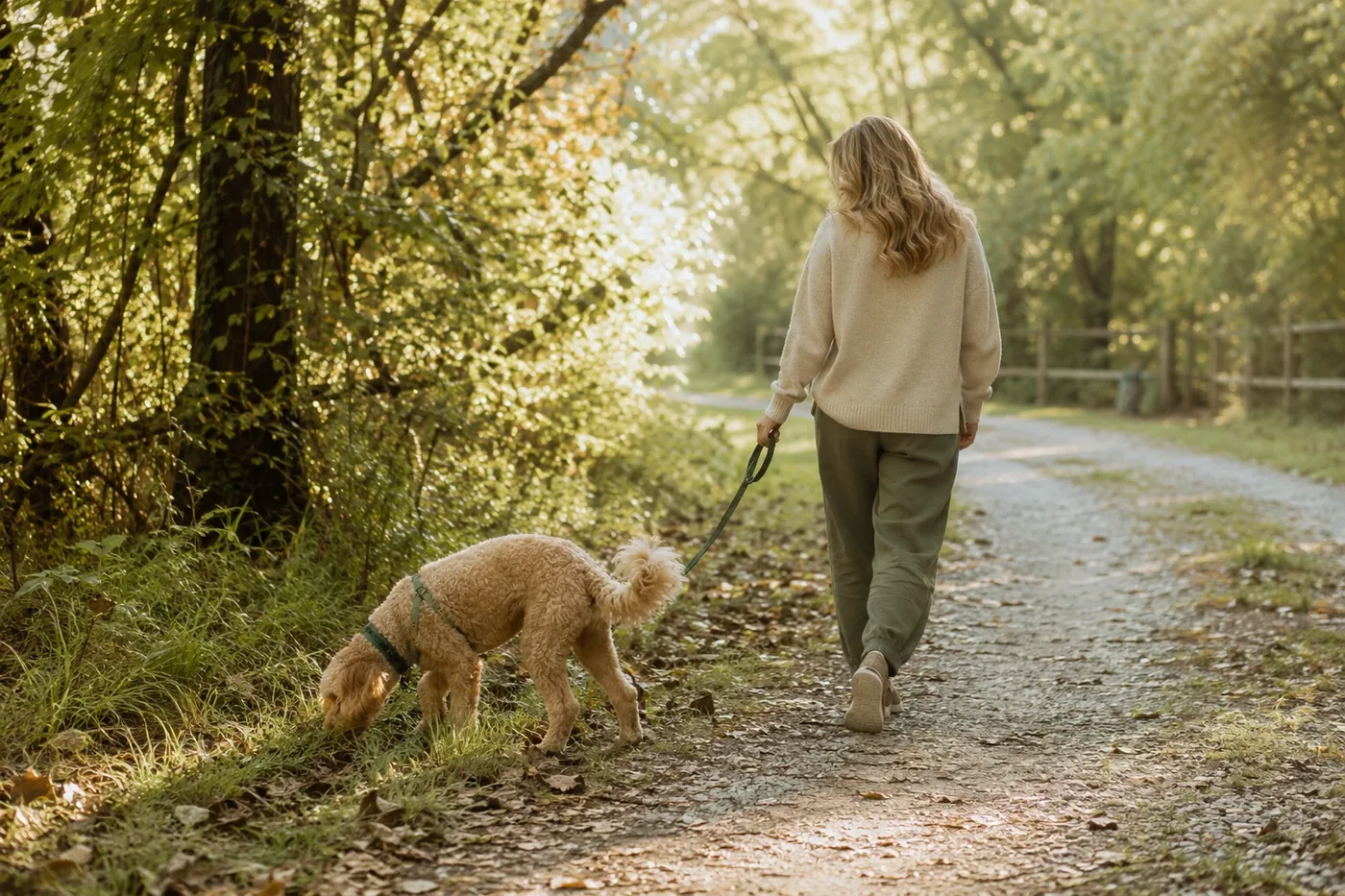
Many of us absorbed the idea that a good dog walk is a brisk, businesslike march — steady pace, straight line, no dawdling at lampposts. A sniffari flips that on its head: the sniffing is the whole point, your dog chooses the pace and, within reason, the route, and you follow along while they read the neighbourhood with their nose.
Sometimes called a decompression walk, this slower kind of outing is one of the easiest and cheapest forms of enrichment there is. It suits puppies, seniors, and everything in between, and it can leave many dogs calmer and more pleasantly tired than a much longer walk taken at human speed.
This guide is for everyday walks with ordinary dogs. If your dog lunges, panics, or seems overwhelmed outdoors, please read dog behaviour red flags first — a sniffari is not a fix for fear, and those dogs deserve qualified help.
Safety note
This article is educational only. It is not veterinary advice, a behavioural diagnosis, or an individualised training plan.
Sniffari walks are an everyday enrichment idea for dogs who are broadly comfortable outdoors. They are not a treatment for reactivity, fear, or aggression. If your dog barks and lunges at dogs, people, or traffic, freezes and refuses to move, or suddenly seems reluctant to walk at all, something bigger may be going on. A sudden behaviour change, signs of pain, illness or injury, severe fear, panic, aggression, or ongoing distress may need a veterinarian, a certified positive-reinforcement trainer, a certified behaviour consultant, or a veterinary behaviour professional. Our pages on dog behaviour red flags, signs of pain in dogs, and sudden dog behaviour change explain what to watch for and when to get help.
What a sniffari actually is
A sniffari is a walk taken on the dog's terms. You pick a safe, legal place; your dog decides what is interesting once you are there. Three full minutes spent working over one fascinating clump of grass is not a delay — it is the walk doing its job.
"Within reason" matters. You still steer your dog around roads, broken glass, other dogs, and anything they should not eat. Think of it as offering choices inside a safe frame: the dog picks the direction and the dwell time, and you quietly manage the hazards.
Distance is irrelevant. A successful sniffari might cover a hundred metres in twenty minutes. If you come home having barely left the block but with a dog who flops down with a happy sigh, it worked.
Why sniffing matters so much to dogs
Sniffing is information
Dogs experience the world primarily through smell, with vastly more scent receptors than we have. A lamppost is a neighbourhood noticeboard: who passed by, when, and what mood they were in. When we march a dog past every smell, we are effectively asking them to walk through their favourite library blindfolded.
Sniffing is calming
Slow, self-directed sniffing is associated with more relaxed, settled behaviour in many dogs. Welfare organisations recommend plenty of sniffing time on walks because it is a natural behaviour dogs need to express — and choosing where their own nose goes is a small, safe dose of autonomy.
Sniffing is tiring — in a good way
Working scent is genuine mental effort. Twenty to thirty minutes of dedicated sniffing can leave many dogs as pleasantly tired as a much longer ordinary walk, which is why sniff-first outings sit alongside the other low-cost ideas in dog enrichment basics. Tired from thinking is often a calmer, nicer kind of tired than tired from running.
How to take a sniffari walk
There is no complicated technique here, but a few choices make the difference between a true decompression walk and an ordinary walk that just runs late.
Choose a quiet, low-pressure place
The best sniffari spots are rich in smells and low in triggers: field edges, quiet trails, a big park at an off-peak hour. Fewer dogs, joggers, and cars mean your dog can sink into the sniffing instead of scanning for surprises. Novelty helps too — an unfamiliar quiet street can be a feast for a nose that knows every inch of the usual route.
Give more line, where it is legal and safe
A longer training line clipped to the back of a comfortable, well-fitting harness gives your dog room to range and follow scent trails without pulling you off your feet. Check local rules first — many areas require a short lead — and save the extra length for open spaces well away from roads, bikes, and crowds. Never wrap a line around your hand, and never jerk it. If you only have a standard lead, a sniffari still works: you simply move with your dog a little more.
Let your dog set the agenda
Once you arrive, your job is mostly to stand still and be patient. Follow where the nose leads and wait out the long sniffs. Some people add a cheerful cue such as "go sniff" so the dog learns when the slow rules apply — useful later for switching between sniffari mode and ordinary walking.
Keep your own habits kind
The same gentle mechanics from loose-leash walking without corrections apply here: a relaxed line, rewards for choosing to be near you, and no yanking — ever. When it is time to move on, call your dog away with a warm voice and trade the sniff for a treat rather than hauling them off mid-investigation.
When a sniffari is not the right starting point
A sniffari assumes your dog finds the outdoors basically pleasant. For some dogs, it is not — yet.
If your dog barks, lunges, or spins at dogs, people, or vehicles, the outside world is currently stressful rather than relaxing, and extra sniffing time does not change that on its own. Our page on barking at noises, visitors, and triggers covers mild, everyday versions — but intense reactions, panic, or anything involving aggression belongs with a qualified professional, not a new walking style. Start with dog behaviour red flags and get in-person help first.
Likewise, a dog who suddenly plants, limps, or refuses walks they used to enjoy may be uncomfortable rather than stubborn. That is a conversation for your vet before it is a training question.
Balancing sniffaris with ordinary walks
Sniffaris are an addition, not a replacement. Most dogs still benefit from brisker walks for physical exercise, gentle practice around everyday sights, and the routine of getting places.
A simple mix works for many households: a couple of dedicated sniffaris a week, ordinary walks the rest of the time, or a "sniff half" built into regular outings — brisk on the way out, nose-down on the way home. On days when getting out is hard, the same nose-work itch can be scratched indoors with the ideas in how to tire out your dog without a walk.
Comfort, weather, and paws
Slow walks mean more time standing around outdoors, so comfort caveats matter a little more than usual.
- Heat: press the back of your hand to the pavement — if you cannot hold it there comfortably for several seconds, it is too hot for paws. In warm weather, walk early or late; heat is genuinely dangerous for dogs, so when in doubt, skip the walk and sniff indoors instead.
- Cold and grit: ice-melt salt can irritate paws. Rinse or wipe feet after winter walks, and keep outings shorter in biting cold.
- Terrain: after rough or brambly ground, glance over paws for seeds, thorns, or cuts. Persistent licking or limping is a question for your vet, not something to walk off.
- Scavenging: a nose-down dog finds edible things. Keep half an eye on what the sniffing turns up, and cheerfully trade a treat for anything questionable.
- Equipment: a well-fitting harness that does not rub, a lead or line in good repair, and water on warm days — no special gear required.
What not to do
Do not:
- jerk the lead, drag your dog away mid-sniff, or treat sniffing as disobedience to be corrected
- use shock, prong, or choke collars, leash corrections, or any "alpha" or dominance-based methods
- demand a strict heel for the entire walk, every walk — dogs need some part of their outings to be theirs
- use extra line length near roads, on narrow paths, or in busy areas, or wrap a long line around your hand
- force a nervous dog to "get used to" an overwhelming place by staying there — that is flooding, and it backfires
- let your dog eat unknown finds — trade for a treat instead, and call your vet if they swallow something worrying
- expect a sniffari to fix reactivity, fear, or any serious behaviour problem — it is enrichment, not treatment
How this connects to other pages
Sniffaris are the outdoor wing of the same idea that runs through dog enrichment basics: letting dogs do natural dog things in safe ways. The polite-walking skills in loose-leash walking without corrections make the non-sniffing parts of your outings just as pleasant. For indoor nose work on days you cannot get out, try a DIY snuffle mat or scatter feeding, and for a wider menu of stay-at-home options, see how to tire out your dog without a walk.
Educational disclaimer
The information on this page is provided for general educational purposes only. It is not veterinary advice, a behavioural diagnosis, or an individualised training programme, and nothing here has been personally tested on or guaranteed for your dog. Every dog is different, and what suits one may not suit another.
If you have any concern about your dog's health, comfort, or behaviour — especially fear, reactivity, or reluctance to walk — please consult a veterinarian, a certified positive-reinforcement trainer, a certified behaviour consultant, or a veterinary behaviour professional. When in doubt, keep things calm and quiet, and get qualified support.
Sources and further reading
These sources support the humane-training and welfare boundaries used on this page. This page is educational only and is not a substitute for veterinary or qualified behaviour support.