
How to stuff and freeze a food toy for dogs
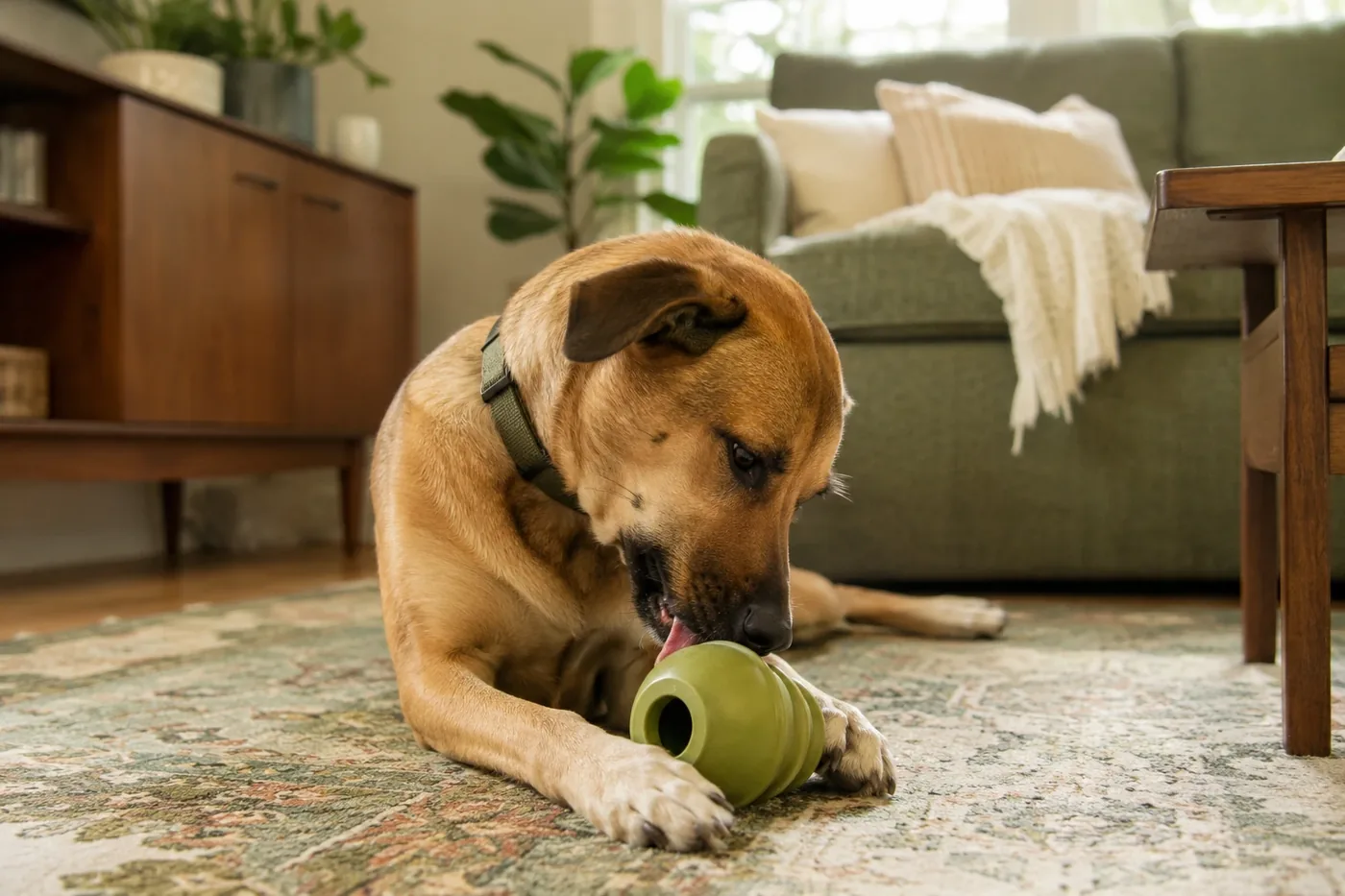
A stuffed food toy is one of the simplest ways to give a dog a calm, satisfying job to do. Instead of eating a meal from a bowl in seconds, your dog works food out of a hollow toy with their tongue and nose, and that slow foraging is genuinely relaxing for most dogs. It is a lovely way to fill quiet time, settle a dog during crate rest, or turn breakfast into a few minutes of gentle enrichment.
This is everyday enrichment for healthy, settled dogs. If your dog panics when left alone, guards food or objects, or shows a sudden change in behaviour, a food toy is not the fix — please read dog behaviour red flags and seek qualified help before going further.
The quick answer
Pack a hollow rubber toy with some of your dog's food so they have to lick and nudge it out. Start loose and easy so they win quickly, then freeze a packed toy later to make it last much longer.
- Start loose: drop a little dry food in so it falls out with almost no effort.
- Build up: pack it more firmly, using a spoon of something soft to hold it together.
- Freeze a packed, damp toy for a longer, calmer licking session.
- Always supervise, size up if unsure, and wash it after use.
Safety note
This article is educational only. It is not veterinary advice, a diagnosis, or an individualised feeding or training plan.
Always supervise a dog with a food toy, especially the first few times, and choose a size and firmness suited to your dog. If your dog stiffens, freezes, or growls when you approach the toy, or becomes distressed when alone, stop and read dog behaviour red flags. Anything about your dog's diet, weight, or which foods are unsafe belongs with your vet, not a web page.
What a food-stuffable toy is
A food-stuffable toy is a hollow, durable rubber toy with an opening you can pack with food. Your dog licks and nudges to work it out, which can take a couple of minutes or much longer depending on how tightly it is packed and whether it has been frozen.
Choose one made of firm, food-safe rubber that flexes a little but is too tough to bite chunks off, and sized so it cannot be swallowed or lodged in the mouth. When in doubt, size up.
Why a stuffed food toy helps
Licking and foraging are naturally soothing for dogs. A well-stuffed toy gives the brain and tongue something steady to do, which is why many dogs grow visibly calmer partway through one.
- It slows fast eaters and turns a rushed meal into a longer, more satisfying one.
- It fills alone time and rest, giving a dog a pleasant focus during a settled spell at home or a stretch of crate rest.
- It channels energy calmly, which pairs well with the other ideas in dog enrichment basics.
- It supports a gentle routine, and the link between calm, fed and settled is worth understanding in the dog gut-brain connection.
How to stuff a food toy, step by step
The golden rule is to make it easy first. A dog who empties the toy quickly learns it is fun and worth returning to; only once they are keen do you make it harder.
Step 1: start loose and easy
At first, drop a few pieces of your dog's regular food loosely into the opening so they fall out with almost no effort. Let your dog discover that tipping and licking the toy produces food — quick, easy wins that build enthusiasm.
Step 2: build to firmer packing
Once your dog gets the idea, press the food in a little more snugly so it takes longer to shift. Mix dry food with a spoon of something soft and mashable to hold it together, then smooth a thin layer across the opening. If your dog gives up or walks away, you have made it too hard, so loosen the next one.
Step 3: freeze for a longer-lasting version
When your dog is comfortable with a firmly packed toy, you can freeze a stuffed one for a much longer session. Pack it, stand it upright in a mug or container so the contents do not leak, and freeze for several hours or overnight. A frozen toy keeps a dog happily occupied far longer than a fresh one, which makes it handy for a calm evening or a settled rest.
What to put inside
The easiest and safest filling is simply your dog's own daily food, portioned out so the toy is part of their normal allowance rather than an extra. Soft, mashable foods — a little of their usual wet food, or soaked dry food — help bind a stuffing together and work especially well for freezing.
Some human foods are genuinely dangerous to dogs, and the safe list changes as advice is updated, so do not guess. Stick to your dog's normal food, and check a current, vet-approved list of foods that are unsafe for dogs — or ask your vet — before adding anything from your own kitchen. If your dog has allergies, a sensitive stomach, or a medical condition, run any filling past your vet first.
Freezing tips
- Portion first. Set aside part of the daily food allowance for the toy so freezing does not turn into overfeeding.
- Stand it upright in a cup or small container while it freezes so nothing leaks out.
- Start with a partly frozen toy for a dog who is new to the idea, then work up to fully frozen once they are keen.
- Serve it somewhere washable, because a thawing toy can get a little messy.
Keeping it safe
A food toy should always be relaxing and low-risk. A few habits keep it so.
- Choose the right size and firmness, erring larger and tougher so it cannot be swallowed or chewed apart.
- Supervise, particularly with a new dog, a puppy, or an enthusiastic chewer, so you can step in if anything goes wrong.
- Inspect before every use and replace any toy that is cracked, worn, or has bits missing — swallowed pieces are a real choking and gut-blockage risk.
- Portion to avoid overfeeding, counting the toy's contents as part of the daily food rather than a bonus on top.
- Ease the difficulty the moment your dog looks frustrated. Foraging should feel rewarding, not maddening.
If your dog is a determined chewer who tries to destroy the toy rather than lick it empty, take it away and offer a different calm activity instead — the safe chews guide covers related ground.
Keeping it clean
Dried-on food and saliva build up quickly inside a food toy. Rinse it after each use and wash with warm, soapy water, using a bottle brush to reach the middle, then air-dry it fully before the next stuffing. Retire and replace any toy once it starts to look tired or damaged.
When a food toy is not the answer
A stuffed toy is enrichment, not a treatment. It can make a settled dog's day nicer, but it will not resolve genuine distress.
If your dog struggles when left alone — pacing, howling, destroying things, or unable to settle — a frozen toy may pass a little time but does not address the underlying feeling. That is separation-related distress, and it needs proper support. For everyday alone-time ideas see enrichment for a bored dog home alone; for real distress start with dog behaviour red flags.
Likewise, if your dog tenses, freezes, or growls when you come near their food toy, do not take it away by force. That guarding behaviour deserves careful, qualified help — again, see dog behaviour red flags.
What not to do
Do not:
- leave a dog unsupervised with a new toy, a damaged toy, or a toy that is too small
- keep using a cracked, worn, or chewed toy — bits that come off can be swallowed
- guess at human foods; never add anything you have not checked against a current vet-approved unsafe-foods list
- pile the toy's contents on top of normal meals, which quietly leads to overfeeding
- make it so hard that your dog gives up in frustration — ease off instead
- use a food toy to manage separation panic, guarding, or a sudden behaviour change on your own
How this connects to other pages
A stuffed food toy is one part of a bigger enrichment picture. Start with dog enrichment basics, then branch into a puzzle feeder, a DIY snuffle mat and scatter feeding, and calm ways to fill alone time in enrichment for a bored dog home alone. Because it is really about food, calm and routine, the dog gut-brain connection fits here too. Whenever behaviour feels off, dog behaviour red flags is the page to return to.
Common questions
What can I stuff a dog food toy with?
The simplest filling is your dog's own food — dry kibble for easy versions, or dry food mixed with a spoon of something soft and mashable to bind it for harder ones. Keep it part of the daily food, and check with your vet about anything you are unsure is safe.
How do you freeze a stuffed dog toy?
Pack the toy, add a little moisture so it holds together, stand it upright in a cup or mug, and freeze it for a few hours. A frozen toy lasts much longer and is extra soothing on a warm day or during a settled spell.
How long does a stuffed food toy take a dog?
Anywhere from a couple of minutes to much longer, depending on how tightly it is packed and whether it is frozen. Start easy so your dog learns it is fun and worth returning to, then make it gradually harder as they get the idea.
Is a stuffed food toy good for leaving a dog alone?
It can help fill a short, settled spell at home, but it is not a fix for a dog who panics when left alone. If your dog is distressed by being alone, please read our dog behaviour red flags and speak to a vet or qualified behaviourist rather than relying on a food toy.
Educational disclaimer
The information on this page is provided for general educational purposes only. It is not veterinary advice, a nutritional plan, a behavioural diagnosis, or an individualised training programme, and nothing here has been personally tested on or guaranteed for your dog. Every dog is different.
If you have any concern about your dog's diet, weight, health, or behaviour — especially food guarding, distress when alone, or a sudden change — please consult a veterinarian, a certified positive-reinforcement trainer, a certified behaviour consultant, or a veterinary behaviour professional. When in doubt, keep things simple, supervise, and get qualified support.
Sources and further reading
These sources support the humane-training and welfare boundaries used on this page. This page is educational only and is not a substitute for veterinary or qualified behaviour support.