
Lick mats for dogs: calm, simple enrichment
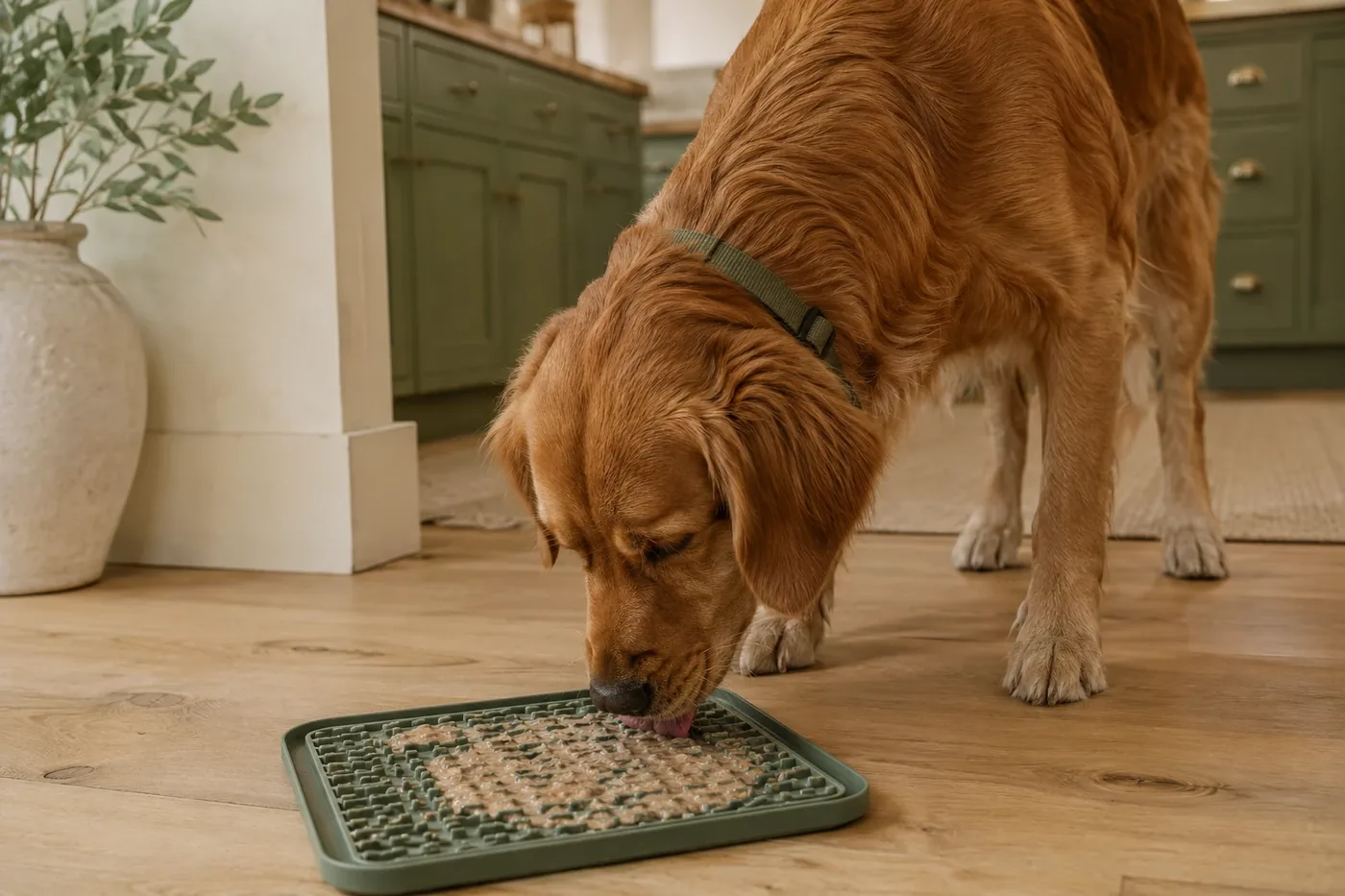
A lick mat is one of the simplest pieces of enrichment you can offer a dog. In plain terms, it is a flat, textured mat — usually made of soft silicone or rubber and covered in ridges, grooves, or raised patterns — that you spread a thin layer of soft food across. Your dog then licks the food out of the texture, which turns a few spoonfuls of their dinner into several relaxed minutes of gentle, absorbing work.
The appeal is not really the mat itself but what licking does for a dog. Steady, repetitive licking tends to be self-soothing: it helps many dogs wind down, slows fast eaters to a calmer pace, and gives a busy brain something quiet to focus on. Used well, a lick mat is a low-effort way to add a little decompression to an ordinary day.
This guide covers everyday, relaxed use for healthy dogs. A lick mat is an enrichment tool, not a fix for a distressed dog. If licking becomes frantic or constant, if your dog panics when left alone, or if you notice a sudden shift in mood or behaviour, that is outside what a mat can help with — start with dog behaviour red flags. For the thinking behind our reward-based approach, see humane dog-training principles and what this site covers.
The quick answer
A lick mat is a textured mat you spread a thin layer of soft, dog-safe food onto, so your dog has to lick to get it. The steady licking is naturally soothing and helps many dogs settle.
- Spread a thin layer of something soft your dog already eats — a little of their usual wet or softened food works well.
- Offer it at calm moments: during grooming, quiet alone-time practice, or winding down in the evening.
- Always supervise, and wash the mat after each use.
- Match it to your dog and take it away if they try to bite or chew pieces off.
Safety note
This article is educational only. It is not veterinary advice, a diagnosis, or a feeding plan for your individual dog.
Always supervise your dog with a lick mat, and treat it as enrichment rather than a solution to a behaviour problem. A lick mat will not resolve separation-related distress, anxiety, or panic, and it is not the answer if your dog guards food or stiffens over the mat. If your dog's licking looks compulsive, if they are distressed when left alone, or if you notice signs of discomfort, stop and read dog behaviour red flags and signs of pain in dogs, then speak to your vet or a qualified, reward-based behaviour professional.
Why licking is calming for dogs
Licking is one of the most natural, self-directed things a dog does, and for many dogs it has a settling effect. The slow, rhythmic motion asks for a little focus without any pressure, which is why a dog working at a lick mat often softens, breathes more slowly, and drifts into a calmer state.
A few everyday benefits are worth knowing:
- Self-soothing. Repetitive licking helps many dogs wind down and shift out of an excitable or fidgety mood.
- Slower eating. Spreading food thinly across texture turns a gulped meal into a longer, gentler task.
- Quiet mental work. Getting the food out of the grooves is a small, achievable puzzle that occupies the mind.
- Decompression. A few calm minutes can help a dog reset after something busy, like a walk or a visitor.
None of this is guaranteed, and no single tool suits every dog. A lick mat can help many dogs relax, but it works best as one small part of a varied routine.
What to spread on a lick mat
The easiest and safest approach is to portion from food your dog already eats. Take a little of their usual daily ration — some wet food, softened kibble, or a spoonful of plain mashed food — and smooth a thin layer across the mat. Because it comes out of their normal allowance, you add enrichment without adding extra calories.
Soft, spreadable foods work best, since the aim is a thin coating your dog has to lick rather than a lump they can pick off in one go. Keep portions small: a mat is meant to last a few minutes, not replace a meal.
Some everyday human foods are genuinely unsafe for dogs, and the picture is updated as we learn more, so it is not something to guess at. Rather than reaching for kitchen scraps, stick to your dog's own food; if you ever want to add something new, check a current vet-approved list of foods to avoid and ask your vet first. We deliberately do not publish a foods-to-avoid list here, because food safety is a veterinary question.
How to introduce a lick mat
First impressions matter, so make the very first go easy. Spread a thin layer of something your dog already likes, so the early licks are quick wins and the mat immediately feels rewarding.
A gentle way to start:
- Start easy. Use a thin layer of a favourite soft food from the daily ration, so success comes fast.
- Offer it calmly. Put the mat down in a quiet spot when your dog is already fairly settled, not wound up.
- Let them choose. Allow your dog to approach and lick in their own time; there is no need to hold the mat or the dog in place.
- Keep it short. A few minutes is plenty, especially at first. Pick the mat up once the food is gone.
Most dogs take to a lick mat quickly. If yours is unsure, try an easier food, a thinner layer, or simply offering it again another day. There is no rush.
Good moments to use a lick mat
A lick mat earns its place in the small, ordinary gaps in a day. Because licking helps many dogs settle, it fits naturally into calm routines:
- A gentle distraction during care. Offering a mat can give a dog something pleasant to focus on during light grooming or nail care. Pair it with the go-at-the-dog's-pace approach in cooperative care and kind handling basics, and never use it to hold a worried dog through something they are trying to escape.
- Quiet evenings. A short lick session can help a dog wind down at the end of a busy day.
- Settle practice. A mat pairs well with teaching a dog to relax on a bed or mat — see teach your dog to settle calmly.
Lick mats are one option among many. Rotate them with other simple ideas to keep things fresh — scattering food to sniff out in DIY snuffle mats and scatter feeding, working out a puzzle feeder, or the broader mix in dog enrichment basics. Gentle food-based activities also tie into digestion and mood in the dog gut-brain connection.
Keeping it safe
Lick mats are low-risk when used sensibly, but a few points matter:
- Always supervise. Stay with your dog while they use the mat, and take it away when they are finished.
- Mind the chewers. A lick mat is for licking, not chewing. A dog who tries to bite, tear, or swallow pieces of a soft mat should not be left with one, because swallowed material is a real choking and blockage risk.
- Portion from daily food. Take the topping from your dog's normal daily amount so the mat does not lead to overfeeding.
- Wash after each use. Clean the mat thoroughly between sessions so old food does not linger in the grooves.
- It is not a treatment. A lick mat is not therapy for anxiety or for a dog who struggles when left alone. If that is your concern, see dog behaviour red flags and get qualified help.
- Watch for guarding. If your dog stiffens, freezes, or warns you off over the mat, calmly give them space, stop using it for now, and read dog behaviour red flags.
What not to do
Do not:
- leave your dog unsupervised with a lick mat, especially one that could be chewed or swallowed
- give a soft or fabric mat to a dog who bites and ingests things, given the choking and blockage risk
- use a mat to pin a frightened dog in place, or to push through grooming or care they are clearly trying to avoid
- rely on a lick mat to fix separation-related distress, anxiety, or panic — those need proper, in-person support
- pile on rich extras or human scraps; keep the topping to your dog's own food and check a vet-approved list before adding anything new
- use shock, prong, choke, or bark collars, leash corrections, or any "alpha" or dominance approach alongside any of this — everything here is reward-based and consent-led
How this connects to other pages
A lick mat is one small tool in a much bigger enrichment picture. It sits comfortably beside other calm, food-based activities like snuffle mats and scatter feeding and puzzle feeders, all gathered together in dog enrichment basics. For longer-lasting chewing rather than licking, see the safe dog chews guide. Because licking helps many dogs relax, a mat also supports settling calmly and can be a kind extra during cooperative care. And since gentle feeding and mood are linked, it connects to the dog gut-brain connection too.
Common questions
What can I put on a lick mat?
A thin layer of something soft, mashable and safe for your own dog — for example a little of their usual wet food or softened food. Keep portions small and count them as part of the day's food, and ask your vet about anything you are unsure is safe for your dog.
Are lick mats good for dogs?
For most healthy dogs, yes — licking is a naturally calming behaviour, so a lick mat can help a dog settle during quiet moments. It is everyday enrichment, not a treatment for anxiety or distress.
How long should a dog use a lick mat?
A few minutes at a time is plenty, and it is fine to stop while your dog is still interested. Always supervise, especially the first few times, and take the mat away if your dog tries to bite or chew pieces off it.
Do lick mats help with anxiety?
A lick mat may help a dog settle in mildly calming moments, but it is not a fix for genuine anxiety, fear or separation distress. If your dog panics when alone or seems distressed, please read our dog behaviour red flags and speak to a vet or qualified behaviourist.
Educational disclaimer
The information on this page is provided for general educational purposes only. It is not veterinary advice, a nutritional plan, or an individualised behaviour programme, and nothing here has been personally tested on or guaranteed for your dog. Every dog is different, and what suits one may not suit another.
If you have any concern about your dog's health, diet, weight, or behaviour — including anxiety, food guarding, or distress when left alone — please consult a veterinarian or a qualified, reward-based behaviour professional. For anything about which foods are safe, ask your vet or check a current vet-approved list rather than relying on a general guide.
Sources and further reading
These sources support the humane-training, enrichment, and welfare boundaries used on this page. This page is educational only and is not a substitute for veterinary or qualified behaviour support.